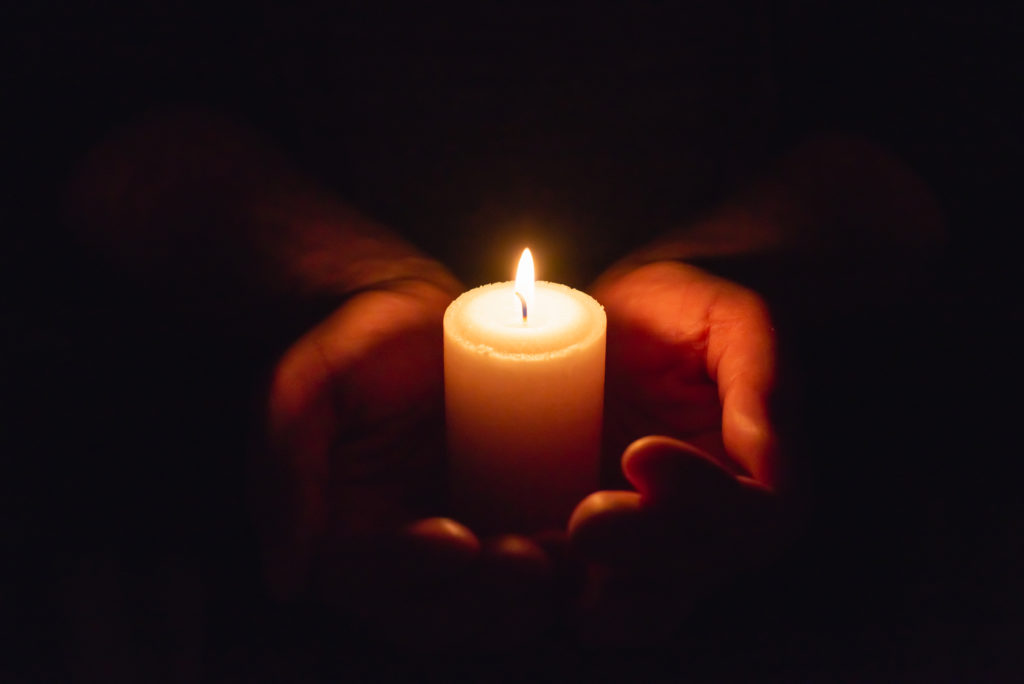
The International Day of Commemoration in memory of the victims of the Holocaust is one of the most important events in the calendar each year, a day where we remember those that paid the ultimate price for hatred, bigotry, othering and greed. Now, more than ever we need to remember and reflect on the atrocities of the most evil impulses of the worst of humanity. Layla, member of the Somerset Youth Parliament Advisory Group has written a powerful article, that is essential reading on this subject.
January 27 marks International Day of Commemoration in memory of the victims of the Holocaust. A day dedicated to the memory of the six million Jews murdered by the Nazi regime across Europe, as well as the millions of other victims of Nazi persecution, including the Roma and Sinti, people with disabilities, LGBTQ+ individuals, and political dissidents (opponents).
As we move further away from the 1930s-40s, the significance of this day only increases. It serves not just as a memorial for those lost, but as a safeguard for the truth of history.
We use January 27 as the day of remembrance as it was chosen by the United Nations General Assembly to mark the anniversary of the liberation of Auschwitz-Birkenau in 1945. Auschwitz was the largest of the Nazi concentration and extermination camps, a place where over 1.1 million people were systematically murdered through Zyklon B gas, starvation, forced labour and medical experiments, amongst other methods.
When Soviet (Russian) troops entered the camp on January 27, they found roughly 7,000 survivors – living witnesses to an atrocity so inhumane we still struggle to fully comprehend it today. By using this specific date, the UN hoped to ensure that the world would never forget the moment the “factory of death” was finally halted.
This year, the theme of remembrance is “Bridging Generations.” This theme carries a particular significance as many firsthand witnesses have now died.
With each passing year, the number of survivors who can share their first-hand accounts is dwindling. This theme focuses on the passage of memory from those who lived through the Holocaust to their descendants, and the overall younger generation. It encourages us to use these stories not just for reflection, but as a so-called ‘bridge’ to modern-day action against antisemitism and prejudice.
The UN’s supporting theme, “Holocaust Remembrance for Dignity and Human Rights,” further emphasizes that the lessons of the 1940s are directly applicable to the human rights challenges we face today.
International Holocaust Remembrance Day is more than a day; it is a political and educational mandate. UN Resolution 60/7, which established the day, outlines several key commitments for member states:
- Countries are urged to create curriculum that teaches the lessons of the Holocaust to prevent future genocides.
- The resolution ‘rejects any denial of the Holocaust as an historical event, either in full or part.’
- It encourages the protection of the physical locations where the Holocaust took place- camps, prisons, and ghettos, to serve as permanent reminders to the tragedy.
In 2026, the fight for historical truth and accuracy has moved into the digital world. Organizations like UNESCO (United Nations Educational, Scientific and Cultural Organization) and the International Holocaust Remembrance Alliance (IHRA) have expressed concern about the rise of Holocaust distortion. This includes the use of AI to create deepfake testimonies or the undermining of the Holocaust in political rhetoric. Commemoration of the Holocaust today involves a sharp focus on digital literacy to help people distinguish fact from extremist propaganda.
Commemoration takes many forms around the world, blending sombre tradition with activism, such as the “We Remember” Campaign, a social media movement where millions post photos with the phrase to show solidarity against hate.
There’s also Stolpersteine (Stumbling Stones), where across Europe, brass plaques are placed in the pavement outside the former homes of victims, ensuring their names are stumbled upon and remembered in daily life.
While January 27 is the international standard, many countries have their own commemoration days, such as ‘Yom HaShoah’ (marked in Israel and by Jewish communities worldwide) and Remembrance Day in various Commonwealth countries, including us in the UK.The phrase “Never Again” is often said on January 27. However, the day is a reminder that “Never Again” is not a guaranteed promise, but an active, daily responsibility for now.
By remembering the Holocaust, we acknowledge the slippery slope of dehumanization- how small acts of exclusion can escalate into government-backed violence. In a world constantly wrestling with conflict and intolerance, International Holocaust Remembrance Day acts as a reminder of the fragility of peace and empathy, urging us to defend the dignity of every individual.
Reading firsthand experiences of the Holocaust is something I, personally, cannot recommend enough. Whilst we hear the blood-chilling statistics of the time, listening and understanding an individual’s story sheds an entirely new light on the tragedy.
Examples include:
- ‘Questions I am asked about the Holocaust’ by Hédi Fried
‘There are no stupid questions, nor any forbidden ones, but there are some questions that have no answer.’- ‘The Choice’ by Dr Edith Eger
‘Even in hell, hope can flower’- ‘The Diary of a Young Girl’ by Anne Frank
‘Paper has more patience than people.’Whilst these are all beautifully written books reflecting unique experiences of the Holocaust, it’s crucial to separate fiction from the true historical happenings. Books (and movies) such as ‘The Boy in the Striped Pyjamas,’ whilst moving, are not reflective of true and realistic experiences, and create a false image of the horrors real people had to endure.
Layla
More information about International Day of Commemoration in memory of the victims of the Holocaust
There are lots of places where you can get information, resources and firsthand information about the holocaust. Below you can find just a few:
- The Holocaust Explained – The Holocaust Explained: Designed for schools
- Anne Frank House – Home | Anne Frank House
- Holocaust Memorial Day Trust – Holocaust Memorial Day Trust
- United Nations – International Day of Commemoration in memory of the victims of the Holocaust | United Nations
- UNESCO – International Day of Commemoration in Memory of the Victims of the
- BBC Newsround – What was the Holocaust? – BBC Newsround