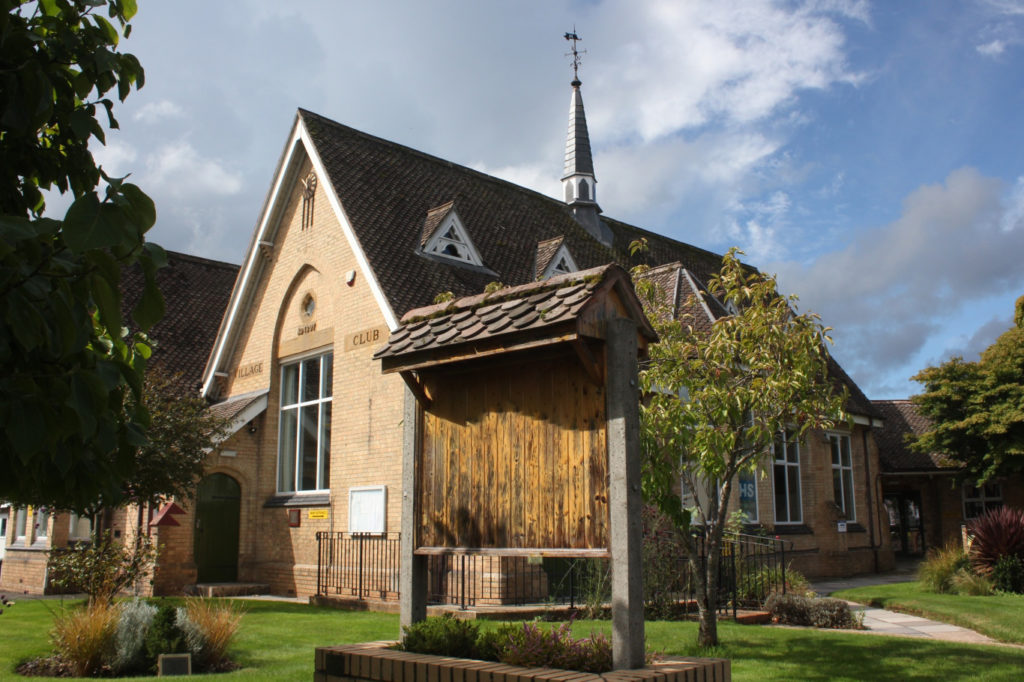
Did you know that May is Local and Community History Month? A month to increase awareness and promotion of local history to our local community and encourage everyone to be a part of their community’s history. Iona, member of the Somerset Youth Parliament Advisory Group, takes us on a lovely stroll through a special part of her local community’s history.
When we’re young, it’s what’s going on right now, and what our future will hold, that generally grabs our interest, more than taking a glance back at an often complex past does. But sometimes, a trip down the misty pathway of history is not only insightful, it’s also interesting. And that’s how I would describe a recent impromptu history lesson I had.
This lesson wasn’t in the classroom or from an online course. It actually took place in a coffee shop, in my local Village Hall.
As Parish Council Youth Representative, I organised a tour of the Village Hall for local primary school pupils, and the tour-guides used me as a guinea pig to practise their presentation. My history lesson began.
I don’t want anyone to be misled – in and of itself, our Village Hall is just a normal building
But its history is probably the reason it still exists. Because, while most by-passers would hardly notice it, it was born through circumstances that might sound more like fable than fact.
In South America in the 1800s, lived a British Victorian trader. After generating millions via the guano (bat manure used as fertiliser) market in South America, he came back to the UK – likely boarding a steamer for the 3-4 week trip back to his homeland before settling down to a life of ease in the South West.
Many like him built Norman-style castles, lived in inherited mansions, or at least had teams of under-privileged servants constantly at the ready.
But this trader was different
Too kind-hearted to leave the many to their misery and want, he became a philanthropist. The Village Hall was born out of his fortunes, as a gift for his poorer neighbours
His popularity spread outside the village too, with donations of ornate panelling in what’s now a restaurant in the next town standing as a long-term tribute to his generosity. When he died, at least 90% of the 2000 people who attended his funeral travelled from outside his home village
But the village hall history lesson doesn’t end with the life of the man who made it possible
In the First World War, when wounded soldiers were shuttled back and forth on the nearby railway, the building was used as a hospital. 20 years later, it served the same purpose in the Second World War.
The village hall was also a hub of aid and action, when the railway became the scene of a terrific train crash in 1940.
And although the tour guides could have finished their story here, the history is still in the making.
The building itself looks a bit old, and parts are disused – that’s undisputed fact. But a surprising number of people would feel lost and lonely without it. To many, it’s become the lifeblood of the village.
If it disappeared, dancing clubs would have nowhere to meet. The church has an office there, and the Parish Council meets there on a regular basis. But most of all, the Coffee Shop hosts a wide variety of regular and one-off visitors, from the village and further afield, who want company, warmth, food and drink. The hall is even the designated “place of safety” for any village emergency.
The history lesson I learnt that day was more than a glimpse into the past. It’s the foundation of the future. Knowing that this building was born out of pure generosity for the village shines a light on its next chapter. It becomes paramount that we should make the best use possible of this gift to us. Why shouldn’t generations to come enjoy what our predecessors gave us?
So next time you use or see something that seems unworthy of a second thought, remember that like our Village Hall, your something also had a beginning. Someone put thought into it, made it for a reason. And if that someone was as generous as our Village Hall’s hero, then we can show our gratitude and appreciation by diving deeper and taking a peek behind the present. You may be surprised at what you find.
Iona
Local and Community History Month
Learning about our local history helps us feel a sense of identity and belonging. Whether you’re interested in buildings, the land, culture or its people, it’s great to explore our surroundings and appreciate how the past shapes our present and reveal the stories of people’s lives. What do you know about your community? We’d love to hear from you and if you have any stories, photographs or pictures- send them to us!
For more information about Local and Community History Month click here.